European Accessibility Act: Why True Accessibility Goes Beyond Formal Compliance

Its objective is to enable people with disabilities to participate in public life on an equal and non-discriminatory basis. For cities and local authorities, the legislation represents another important milestone on the path towards inclusive, modern, and future-ready public infrastructure.

Efficiency, safety and user-friendliness for everyone

In practice, however, it quickly becomes clear that accessibility is about far more than simply meeting legal requirements. Particularly when it comes to complex self-service systems such as payment kiosks or digital payment solutions, success is determined not by declared compliance, but by how easily and effectively people can actually use the system in everyday situations.

Local authorities therefore face a dual challenge: adapting existing infrastructure while procuring new systems that fully meet the requirements of the EAA. Modern payment systems are no longer merely transaction interfaces. They have become an integral part of municipal service delivery, playing a key role in operational efficiency as well as the overall user experience.

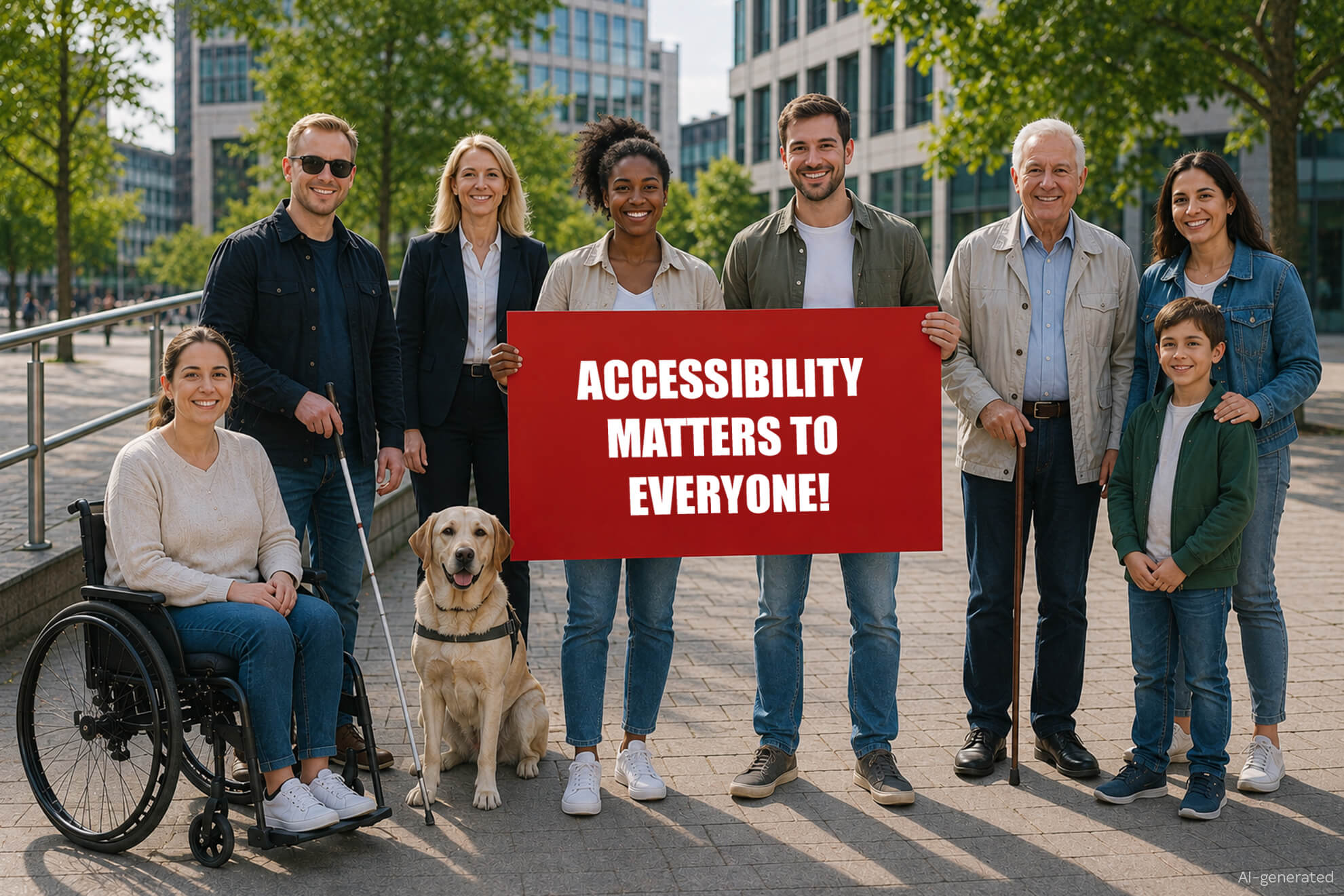
In reality, accessibility is often reduced to addressing only isolated aspects. While some solutions focus on individual requirements, genuine accessibility demands a holistic approach that seamlessly combines hardware, software, and intuitive user guidance. True accessibility is achieved only when these elements work together. Only an integrated concept ensures that all user groups, regardless of age, disability, or digital literacy, can access public services on equal terms.

The EAA sets out clear expectations in this regard. Beyond physical requirements such as operating heights or signage, it places particular emphasis on digital accessibility throughout the entire user journey. The decisive factor is not the isolated implementation of individual criteria, but the consistent design of the complete user experience.

Against this backdrop, integrated system solutions are becoming increasingly important. They treat accessibility not as an afterthought or a compliance exercise, but as a fundamental design principle from the very beginning of the development process. Modern payment systems are therefore engineered around these requirements, ensuring that inclusion is built in from the outset.

A good example of this approach can be found in the latest generation of payment systems from HESS Cash Systems. Accessibility has been systematically enhanced, from optimized operating heights and accessible tactile and acoustic user guidance to a fundamentally redesigned labelling and operating concept. The focus was not simply on complying with individual standards, but on creating an intuitive, practical solution that can be used comfortably by all citizens in their everyday lives.

The result is a holistic system concept in which accessibility is an integral component rather than an additional feature. For municipalities, this translates into greater planning certainty, higher user acceptance, and more efficient long-term operations.

As one of the leading providers of cash handling systems and integrated payment solutions, HESS Cash Systems supports banks and municipalities in implementing modern, inclusive infrastructures. Its tailor-made, end-to-end solutions, Made in Germany, combine technological innovation with practical, real-world implementation.

With the EAA now in force, one thing is becoming increasingly clear: accessibility will continue to grow in importance. The key question is no longer whether requirements are formally met, but how consistently they are translated into integrated systems that genuinely work for everyone. Local authorities that invest in holistic, integrated solutions not only achieve regulatory compliance, but they also create lasting added value for every user.

Share :